KEY HIGHLIGHTS
- The 2026 Chevelle SS 464 revives classic American muscle with modern performance tech.
- A supercharged **7.4L V8** pushes out 650 hp, targeting pure driving thrill.
- Built for enthusiasts who want old-school attitude with current-day engineering.
The 2026 Chevelle SS 464 aims straight at drivers who miss raw muscle cars but still expect modern control and comfort.
Revealed on January 9, 2026, the Chevelle SS 464 is positioned as a modern interpretation of a classic American icon. It blends retro-inspired styling with advanced engineering, targeting enthusiasts who value sound, speed, and presence more than subtlety.
Chevrolet’s approach is simple: keep the soul intact, upgrade everything else. The result is a car that looks aggressive, feels powerful, and stays relevant in a market dominated by turbocharged and electrified rivals.
| Specification | Details |
|---|---|
| Engine | 7.4L Supercharged V8 |
| Power Output | 650 hp |
| Torque | 780 Nm |
| Transmission | 6-speed manual / 10-speed automatic |
| 0–100 km/h | 3.8 seconds |
| Top Speed | 315 km/h (196 mph) |
| Drivetrain | Rear-Wheel Drive (RWD) |
| Fuel Efficiency | 10–12 mpg (city) / 15–18 mpg (highway) |
| Seating Capacity | 4 passengers |
| Infotainment | 12-inch touchscreen, wireless Apple CarPlay & Android Auto |
| Safety Tech | ABS, airbags, traction control, stability control, lane assist |
Exterior Design: Classic Lines, Modern Muscle
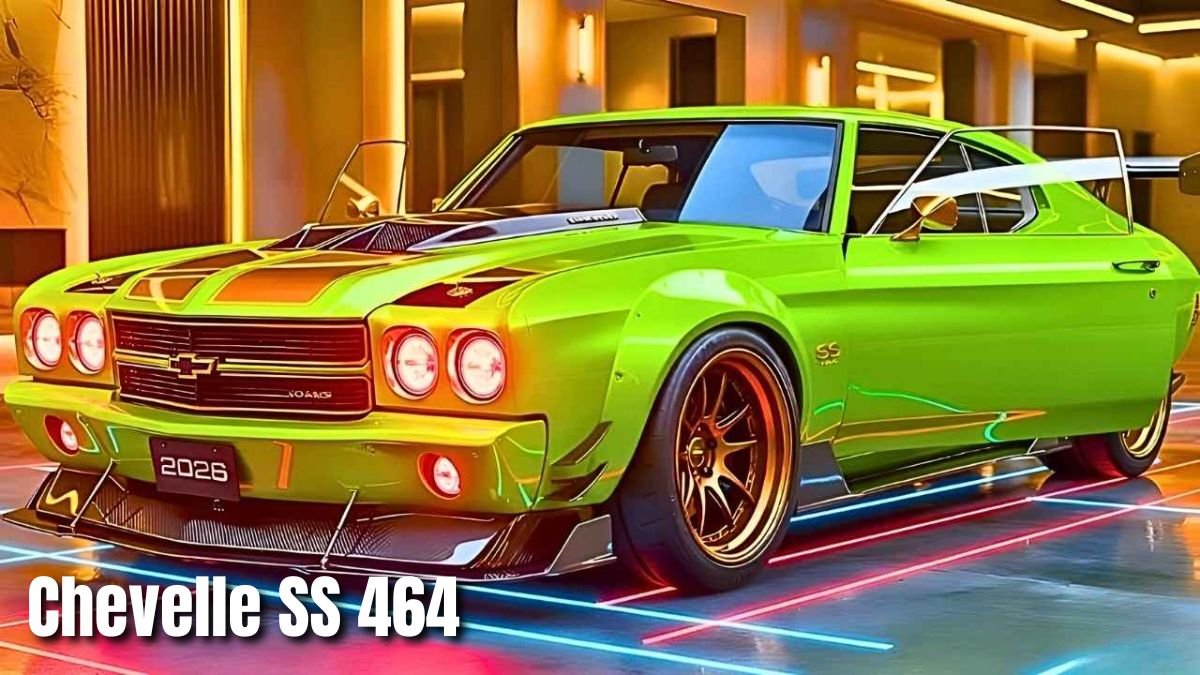
One look at the Chevelle SS 464 and the intent is clear. The wide stance, muscular rear haunches, and long hood pay tribute to classic Chevelle proportions, while modern aerodynamics keep the design functional at high speeds.
LED lighting sharpens the front and rear profiles, and contemporary wheel designs bring the car into the present without losing its heritage appeal. Subtle aerodynamic tweaks improve stability without softening the aggressive character muscle fans expect.
This isn’t retro for nostalgia’s sake—it’s purposeful and confident.
Interior Comfort and Technology
Inside, the Chevelle SS 464 balances performance focus with everyday usability. Sport seats provide strong lateral support, while premium materials lift the cabin beyond old-school muscle car basics.
The driver-centric layout keeps controls intuitive, supported by digital displays that deliver performance data and navigation at a glance. Smartphone integration is seamless, and the infotainment system feels current without overwhelming the cockpit.
It’s a cabin designed to be driven hard, but still comfortable enough for daily use.
Performance and Driving Experience
The heart of the Chevelle SS 464 is its supercharged V8, and it defines the experience. Throttle response is immediate, acceleration is relentless, and the engine note is unmistakably old-school.
Despite the raw output, modern suspension tuning, adaptive steering, and electronic aids keep the car composed. High-speed stability feels secure, and cornering confidence is far stronger than muscle cars of the past.
Whether paired with the manual gearbox for maximum engagement or the automatic for quicker shifts, the Chevelle SS 464 delivers performance that feels intentional, not excessive.
Final Verdict
The 2026 Chevelle SS 464 isn’t trying to chase trends. It’s built for drivers who want presence, power, and personality in an era of quiet efficiency.
With 650 hp, rear-wheel drive, and unmistakable styling, it stands as a bold reminder that modern engineering doesn’t have to dilute muscle car identity. For enthusiasts craving a visceral driving experience with contemporary refinement, the Chevelle SS 464 makes a strong case.
Frequently Asked Questions
Is the 2026 Chevelle SS 464 officially confirmed by Chevrolet?
Details may vary by market, and buyers should verify specifications and availability through official Chevrolet channels.
Is the Chevelle SS 464 suitable for daily driving?
While performance-focused, modern suspension and interior comfort make it usable for regular driving, depending on owner expectations.
Will the Chevelle SS 464 be available outside the US?
Availability depends on regional regulations and distribution plans, which have not been fully confirmed.
 S$200 Claim